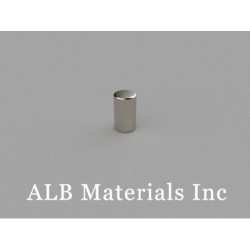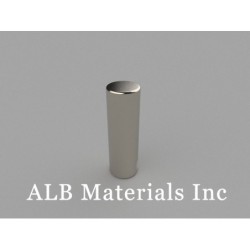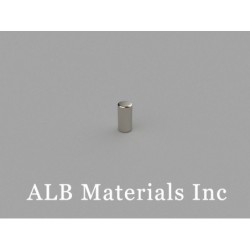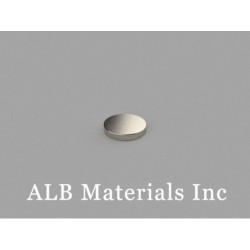
Subcategories
-

Disc Magnets
Round Neodymium Disc Magnets (1mm–60mm)
Disc magnets are the most versatile neodymium magnet shape and the workhorse of thousands of industrial and hobby applications. Our round NdFeB discs range from tiny 1mm sensor magnets to 60mm handling magnets, with 2,500+ stock sizes in grades N35 through N52 and nickel, epoxy, or gold coatings. Pull force scales with both diameter and thickness: a 1" x 1/8" disc holds about 15 lbs on direct steel contact, while a same-diameter 1/4" thick disc can more than triple that. Use the filters to narrow by size, grade, and coating.
How to Choose Disc Magnets
- Size first: diameter must fit your recess or assembly; thickness determines pull force more than diameter per unit of material.
- Grade: N52 for maximum strength at room temperature; N42M/N35SH grades for environments above 60°C (140°F) — see our grade guide.
- Coating: nickel (standard, dry indoor), epoxy (humidity/marine), gold (cosmetic, low outgassing) — coating comparison.
- Quantity: volume discounts apply automatically — request a quote for 500+ pieces.
Frequently Asked Questions
What is the strongest disc magnet size? Strength grows with volume. Our 60mm N52 discs deliver the highest raw pull force; for strength-per-millimeter, thicker magnets of the same diameter are the better pick.
Can I get disc magnets with adhesive backing? Yes — 3M adhesive-backed disc magnets are stocked in popular sizes.
What tolerance do your disc magnets hold? Standard tolerance is ±0.1mm (±0.004"). Tighter tolerances are available on custom orders.
Do you supply metric and inch sizes? Both. We stock full millimeter (1mm–60mm) and fractional inch series.
-

Cylinder Magnets
Neodymium Cylinder Magnets
Cylinder (rod) magnets concentrate flux along their axis, producing deep magnetic fields that make them the standard choice for sensors, reed switches, meters, medical devices, and anywhere a magnet must work across an air gap. We stock N35–N52 cylinders from sub-millimeter diameters to large rods, axially magnetized as standard.
How to Choose Cylinder Magnets
- Long cylinders project the field further — better for activating sensors through plastic or aluminum walls.
- Short, wide cylinders behave like discs and maximize direct-contact pull force.
- Precision applications: we hold ±0.1mm tolerance; tighter specs available on request.
Frequently Asked Questions
What is the difference between a cylinder and a disc magnet? Height. Short cylinders are usually listed as discs; a length ≥ the diameter is typically called a cylinder. Field depth increases with length.
Are your cylinders suitable for Hall-effect sensors? Yes — our standard axially magnetized cylinders are widely used with Hall and reed switches; diametral magnetization is available for rotary sensing.
-

Block Magnets
Rectangular Neodymium Block Magnets
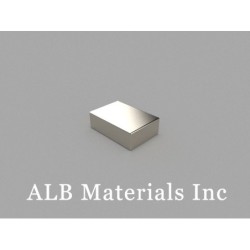
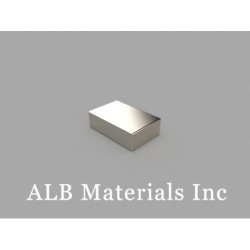
Block (rectangular) neodymium magnets deliver high pull force in a compact, easy-to-mount footprint, making them the first choice for fixtures, jigs, holding assemblies, sensors, and magnetic circuits. We stock blocks from 1/16" cubes up to large industrial bars, in N35–N52 grades, nickel or epoxy plated. Blocks can be magnetized through thickness or through length — check each item's specification before designing your assembly.
How to Choose Block Magnets
- Pull force: proportional to pole-face area — a wider pole face grips flat steel better than a narrow, thick bar.
- Orientation: most blocks are magnetized through thickness (the two large faces are N and S); blocks magnetized through length behave differently in arrays — see magnetization directions.
- Mounting: countersunk block variants allow screw mounting — see our countersunk magnets.
Frequently Asked Questions
Which block magnet shape holds best on flat steel? A block with a large pole face and moderate thickness maximizes contact area for holding applications.
Can block magnets be machined? No. Sintered NdFeB is brittle — grinding or drilling will chip and demagnetize the material. Order custom sizes instead: we cut to spec before magnetization.
Do block magnets come in metric sizes? Yes, both metric and inch series are stocked.
-

Ring Magnets
Neodymium Ring Magnets with Center Hole
Ring magnets combine the pull force of a disc with a center through-hole, so they can be bolted, screwed, or mounted on shafts — ideal for speakers, sensors, encoder wheels, medical devices, and holding fixtures. Our NdFeB rings are stocked in a wide range of outer diameters, inner diameters, and thicknesses, axially or diametrically magnetized, in N35–N52 grades.
How to Choose Ring Magnets
- Inner diameter: match your fastener or shaft size; the hole reduces pole area, so pull force is lower than an equal-diameter disc.
- Magnetization direction: axial (most common, N and S on the two flat faces) vs. diametral (for sensor and rotor assemblies).
- Concentric vs. countersunk: countersunk rings accept flat-head screws flush-mount; plain through-holes take bolts or rivets.
Frequently Asked Questions
Why does a ring magnet hold less than a disc of the same outer diameter? The center hole removes pole-face area, reducing direct contact with steel. The bolt-through mounting usually outweighs this loss.
Do you offer diametrically magnetized rings? Yes — item descriptions state the magnetization direction. Contact us for custom directions.
-

Countersunk Magnets
Countersunk Neodymium Magnets — Screw-Mount, Flush Fit
Countersunk magnets have a conical recess that accepts a standard flat-head screw, leaving the magnet perfectly flush with the surface. They are the cleanest way to attach magnets to wood, plastic, and enclosures for cabinets, tool racks, displays, doors, and 3D-printed parts. Available as discs and blocks, in N35–N52 grades, with metric and inch countersinks.
How to choose: match the countersink angle to your screw head; confirm screw length leaves at least 2mm of engagement; choose nickel coating for indoor wood and plastic work.
FAQ — What size screw fits? Each product page lists the countersink dimension and recommended screw size. Do not overtighten: sintered NdFeB chips under point loads.
-

Stepped Magnets
Stepped Neodymium Magnets
Stepped (two-diameter) magnets combine a small pole with a larger mounting base in a single sintered piece. Typical uses include encoder wheels, rotary sensing, fine-positioning assemblies, and applications where the magnet must pass through a narrow bore while seating in a wider recess. Custom stepped profiles are produced to drawing — send your sketch for a quote.
How to choose: specify both diameters and total height; diametral magnetization is available for rotary encoder duty. Standard tolerance ±0.1mm.
-

Plastic Coated Magnets
Plastic-Coated Neodymium Magnets — Waterproof & Washable
A sealed plastic jacket makes these neodymium magnets waterproof, washable, and far more resistant to chipping and corrosion than nickel-plated types. They are the standard choice for aquarium equipment, outdoor fixtures, marine and washdown environments, glass-mounted signage, and classroom demonstrations. The coating also cushions impact, extending magnet life in handling applications.
How to choose: plastic coating adds 0.5–1mm to each dimension and slightly reduces pull force versus the bare size; for permanent submersion verify the seal is intact. Contact us for custom colors.
FAQ — Can plastic-coated magnets go underwater? Yes, the molded jacket is fully sealed for permanent submersion. Do not cut or pierce the coating.
-

Mounting Magnets
Mounting Magnets with Hook, Thread & Stud
Mounting magnets are steel-potted neodymium assemblies that bolt, screw, or hang wherever you need instant, removable magnetic attachment. The steel pot both protects the brittle NdFeB core and concentrates the flux on the holding face, so a potted magnet holds far more than a bare magnet of the same size. Choose from threaded-stud, hook, eyelet, and counterbore styles in metric and inch threads.
How to Choose Mounting Magnets
- Thread type: metric (M3–M10) or inch (#6–3/8") — match your fixture hardware.
- Holding force: rated on clean, flat, thick steel. Paint, curvature, or thin sheet steel reduces it by 50% or more.
- Indoor vs. wet: standard nickel pots for dry use; epoxy-sealed versions for humid environments.
Frequently Asked Questions
Why do mounting magnets hold stronger than bare neodymium magnets? The steel cup redirects flux to the single working face, roughly doubling direct-contact hold versus a bare magnet.
Can mounting magnets be used outdoors? Short-term yes; for permanent outdoor use choose epoxy-sealed potting to prevent corrosion.
Do you offer custom assemblies? Yes — custom potting, thread sizes, and force ratings are available with volume orders.