
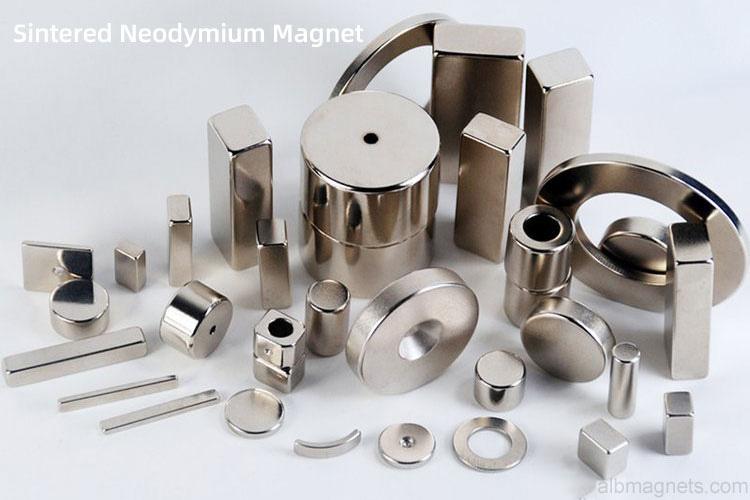
Magnets are ubiquitous in modern industry, playing a vital role in everything from electronic devices to automotive manufacturing, robotics, and medical equipment. Among them, rare earth neodymium magnets and samarium cobalt magnets are favoured for their excellent magnetic properties. This article will delve into the manufacturing process of magnets, especially neodymium magnets and samarium cobalt magnets, to provide you with a detailed step-by-step guide.
Magnet production line: how are neodymium magnets made?
Neodymium magnets, also known as neodymium-iron-boron magnets (NdFeB), are one of the strongest permanent magnets available. Its manufacturing process is complex and delicate, involving several key steps.
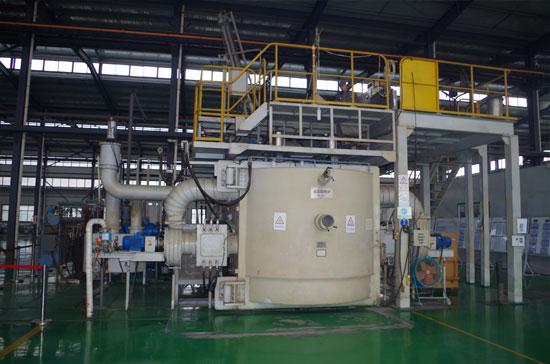
First, all the elements used to make neodymium magnets, including neodymium, iron and boron, are placed in a vacuum induction furnace for melting. This process, called vacuum melting, is designed to fuse these elements into an alloy in an oxygen-free environment.
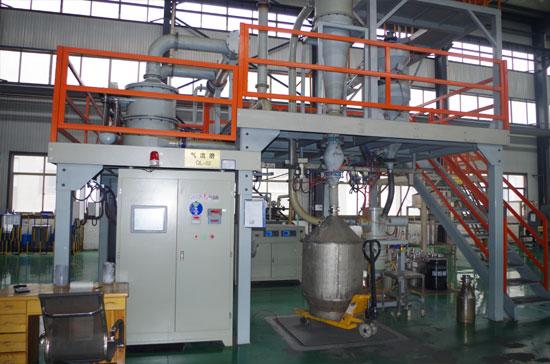
Next, the alloys are cooled to form ingots, which are then ground into tiny particles, each typically only three microns in size, by a jet mill.
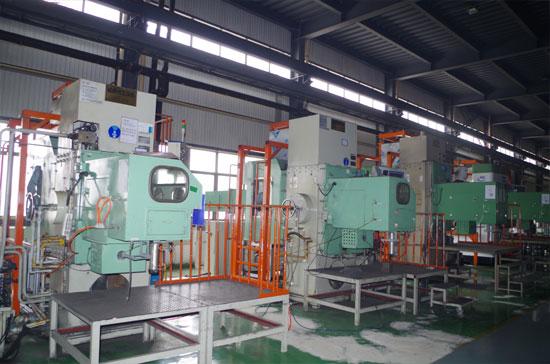
These ultra-fine powders are then pressed into a mould while a magnetic field is applied to hold the magnetic direction in place. This process is known as moulding, and the magnetic direction is locked in by the action of the magnetic field, resulting in an anisotropic magnet.
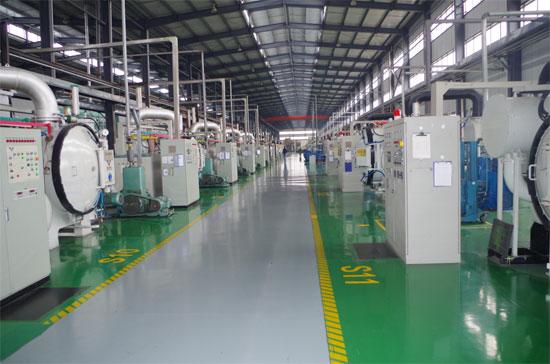
Next, the material is heated to near the melting point for sintering. The sintering process takes place in an oxygen-free, inert environment that fuses the magnetic particles together. After sintering, the material undergoes rapid cooling to reduce areas of poor magnetism and maximise performance.
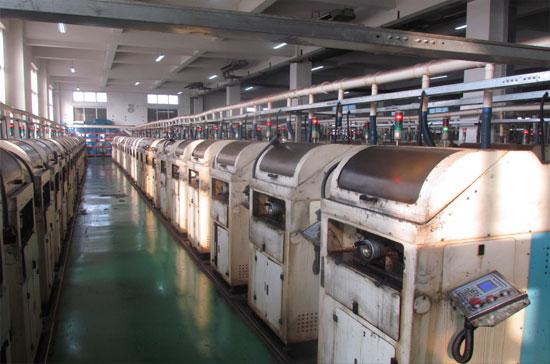
Finally, the material is cut into the desired shape and plated to protect the surface. The plating material is usually a nickel-copper-nickel mixture, but other metals or materials such as rubber and PTFE can also be used.
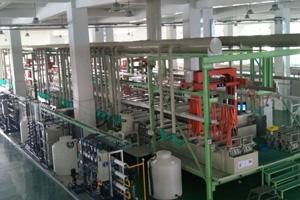
After these steps, the magnet is re-magnetised and eventually becomes the high performance neodymium magnet we know.
Industrial Magnet Manufacturing: How are Samarium Cobalt Magnets Made?
Samarium cobalt magnets are another important type of permanent magnet, and their manufacturing process is different from that of neodymium magnets. First, the raw materials needed to make samarium cobalt magnets are heated and melted in an induction furnace filled with argon gas to form an alloy. Next, the liquid alloy is poured into moulds and water-cooled to form ingots. These ingots are then ground and crushed into tiny particles. For bonded samarium cobalt magnets, the alloy powder is mixed with an adhesive (e.g., epoxy resin) and then pressed and moulded under an external magnetic field. This process orientates the magnetic particles to form an anisotropic magnet. Finally, the magnet is coated and magnetised.
For sintered samarium cobalt magnets, the first two steps of the manufacturing process are the same as for bonded samarium cobalt magnets. The difference is that the powder is pressed into a mould and sintered at temperatures of up to 1250°C to fuse the powder into a solid. The sintered material is solution treated at similar temperatures and then tempered between 700°C and 900°C and cooled by an external magnetic field. Next, the magnets need to be ground and machined to achieve the desired size and shape. Since the material is very hard and fragile, water-cooled diamond-coated grinding equipment must be used. Finally, the magnets are coated and magnetised, completing the entire manufacturing process.
Permanent Magnet Manufacturing: Neodymium Magnets vs Samarium Cobalt Magnets
Neodymium magnets and samarium cobalt magnets are both high-performance permanent magnets, but there are some differences in their manufacturing processes and application areas. Neodymium magnets have a higher magnetic energy product, making them the strongest permanent magnets available. However, they are more sensitive to temperature, and their performance usually declines in high-temperature environments. In contrast, samarium cobalt magnets have better temperature stability and are able to maintain their magnetic properties at higher temperatures. This makes samarium cobalt magnets more popular for aerospace, automotive and military applications.
In terms of manufacturing process, neodymium magnets are relatively complex, involving several delicate steps, such as vacuum melting, jet mill grinding, magnetic field forming and sintering. The manufacturing process for samarium cobalt magnets, on the other hand, includes steps such as induction furnace melting, water-cooled ingots, powder grinding, bonding or sintering. Although both involve high-temperature processing and magnetic field application, the specific process parameters and material handling differ to suit the characteristics of the respective materials.
Trends in Magnet Manufacturing Technology
With the continuous progress of science and technology, magnet manufacturing technology is also evolving. On the one hand, the improvement of the manufacturing process has led to further enhancement of the performance of magnets. For example, by optimising the sintering process and magnetic field application, the magnetic energy product and coercivity of neodymium magnets have been significantly improved. On the other hand, research and development of new materials is also driving the magnet manufacturing industry.
For example, researchers are exploring new alloy compositions and structures to improve the temperature stability and corrosion resistance of magnets. In addition, environmental protection and sustainability have become important trends in the magnet manufacturing industry. Due to the high environmental impact of mining and processing rare earth elements, many companies are seeking more environmentally friendly production methods. For example, by recycling and reusing waste magnet materials, the need for new resources is reduced. At the same time, energy consumption and waste emissions from the manufacturing process are being progressively reduced to achieve greener production.
Importance of the magnet manufacturing process
The complexity and delicacy of the magnet manufacturing process not only determines the performance and quality of magnets, but also affects their performance in various applications. High-performance magnets require a rigorous manufacturing process to ensure their magnetic properties, dimensional accuracy and durability. For example, in electric vehicles, the high-efficiency conversion capability of neodymium magnets directly affects the range and performance of the vehicle. In medical equipment, such as magnetic resonance imaging (MRI) machines, the stability and reliability of samarium cobalt magnets are critical.
In addition, improvements and innovations in magnet manufacturing processes are supporting the development of emerging technologies. For example, in renewable energy, high-performance magnets in wind turbines and electric vehicle motors can improve energy conversion efficiency and facilitate the widespread use of clean energy. In electronic devices, miniaturised and high-performance magnets meet the demand for miniaturisation and high performance in consumer electronics.
In short, the magnet manufacturing process is not only a technology-intensive industrial process, but also an important basis for promoting the development of modern science and technology. By continuously optimising the manufacturing process and developing new materials, ALBmagnets will continue to provide high-performance magnetic solutions for various fields, helping technological innovation and industrial upgrading.
Explore Our Neodymium Magnets
ALB Materials Inc is a leading manufacturer and wholesaler of Neodymium Magnets. Our extensive range of neodymium magnets, available in different grades, is utilized in various fields, including loudspeakers, wind turbines, mechanical devices, and medical equipment. We take pride in our competitive pricing, timely delivery, and exceptional customer service. For more information and to explore our products, visit our homepage.